Swiftcore Lab — UX/UI and content marketing in an agency
UX/UI, copywriting and SEO under one roof — research to a site that sells
- Audience
- Small and medium businesses without in-house design or marketing teams
- Goal
- Deliver a complete, search-optimised online presence
- My role
- Co-founder, UX/UI design, content, SEO & sales
- Platform
- Web, Figma, Custom code, Instagram, Google Analytics
Overview
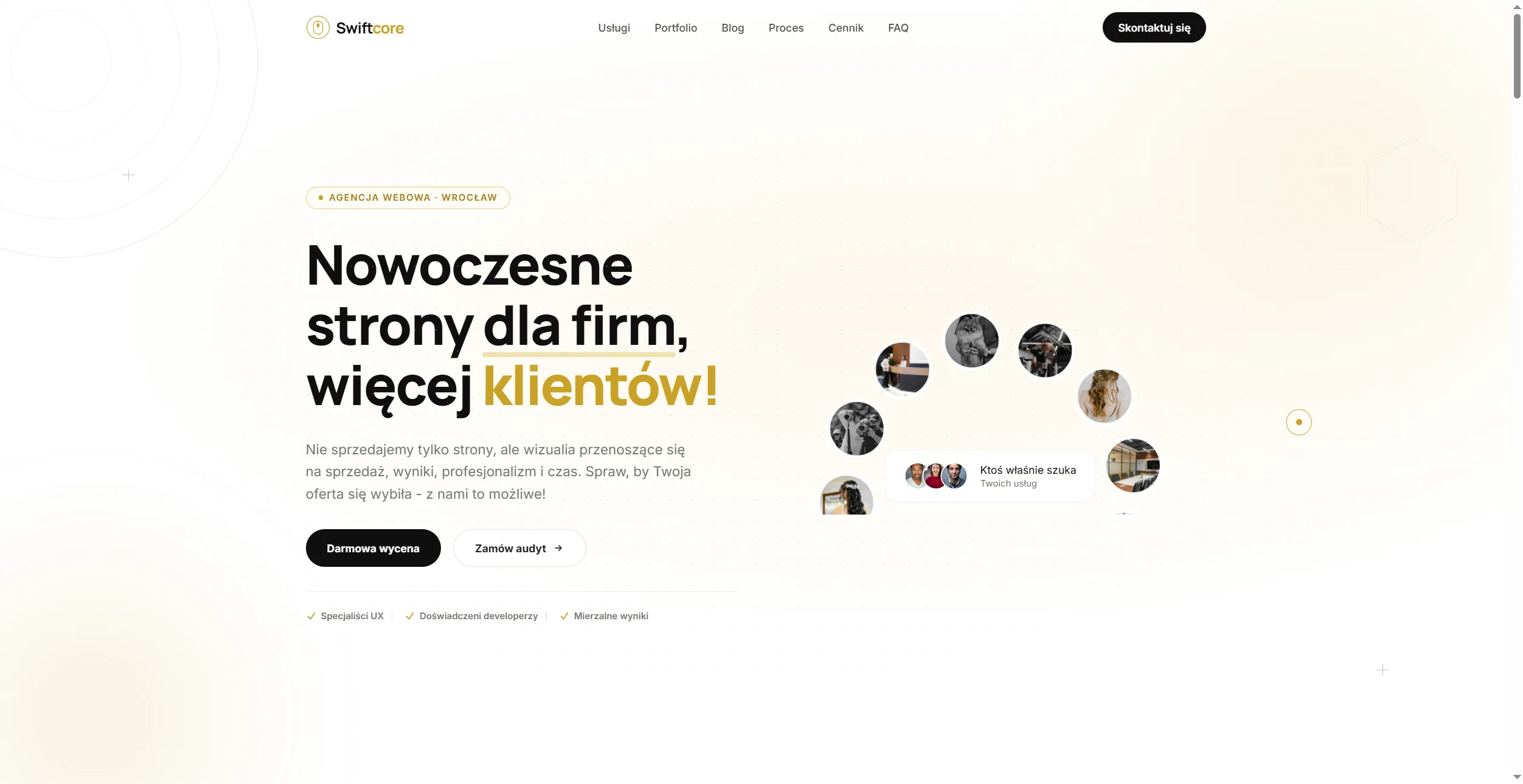
Swiftcore Lab is an agency I co-founded, specialising in designing and deploying websites for small and medium-sized businesses. I own the entire process on the design and content side — from the first client conversation, through research and UX/UI design, all the way to deployment, SEO optimisation, and running the brand's communication.
Challenge
Small and medium businesses rarely have the budget for separate design, marketing, and development teams. They need one person who understands both the user and the business goals — and can translate them into a website that not only looks good but genuinely attracts customers from search and social media.
Process
An end-to-end model
Rather than splitting the work across separate design, development, and marketing teams, I built one pipeline I own end to end — from client discovery and market research, through UX/UI design, to deployment and ongoing marketing. Holding the full picture means decisions that usually stall between specialists happen in minutes.
Design & build
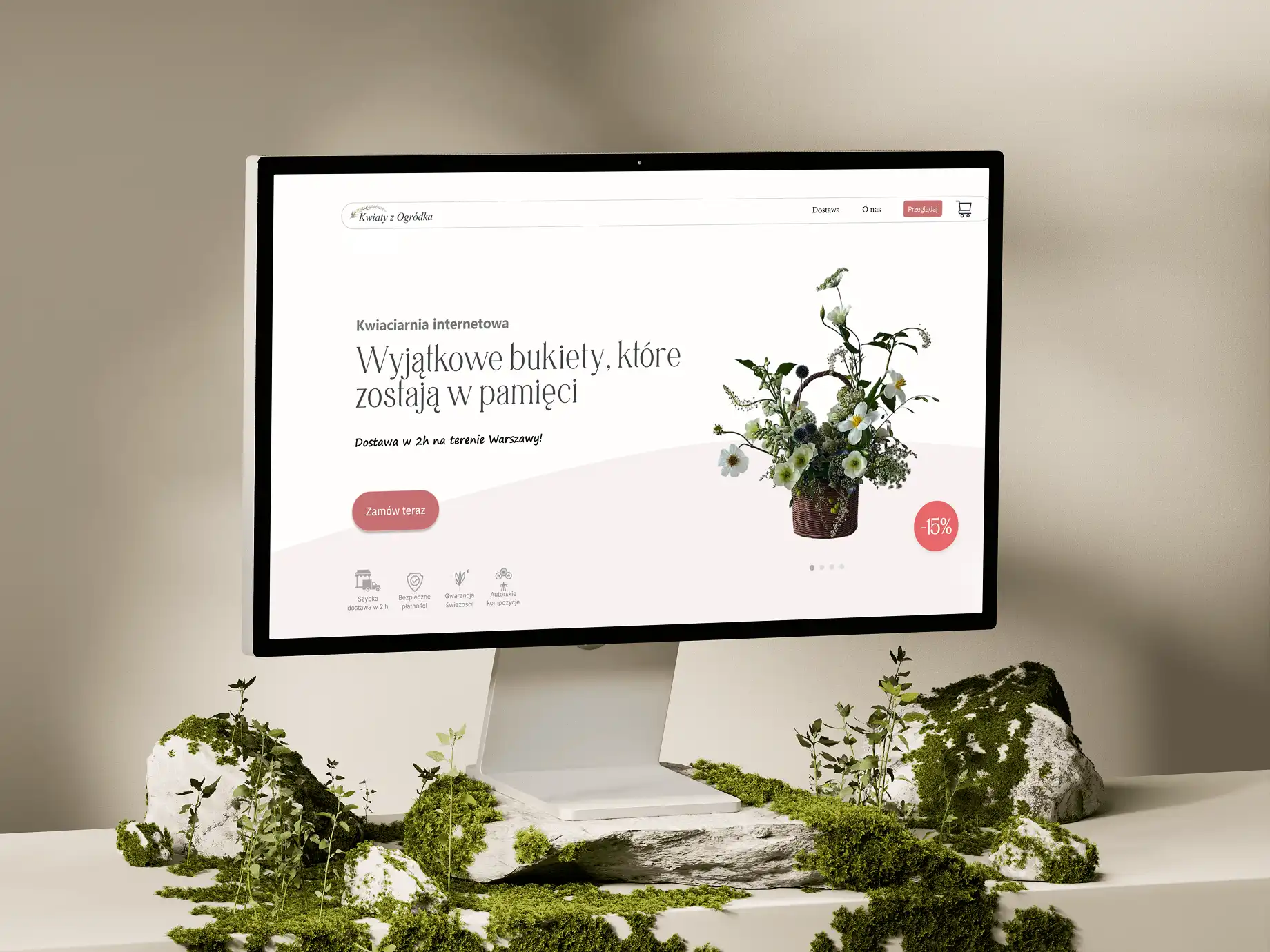
I design each site in Figma — flows, wireframes, and interface — with care for accessibility and a clear path to action, then hand-code and deploy it, SEO-optimised from the ground up; I reach for WordPress only when a client needs to manage the content themselves. So far I've designed and launched 5 client sites, with our own scoring 100/97/100 on Lighthouse — the three points off accessibility are a deliberate trade-off, keeping the brand's background gradients rather than flattening them to chase a perfect contrast score.
A content & SEO engine
Past launch, I run the content that keeps the sites working — 24 SEO-optimised blog posts plus brand communication on the site and Instagram — so they keep pulling in customers from search and social instead of going quiet after go-live.
Closing the loop
I track what the work produces in Google Analytics and use those results to refine the content and the sites over time — turning a one-off build into something that compounds.
Results
Clients get a complete online presence from a single source — visually consistent, search-optimised, and backed by regular content. The sites are built to perform: our own scores 100 / 100 / 100 on Lighthouse for Performance, Best Practices, and SEO. Combining UX, copywriting, and marketing skills lets me deliver projects faster and more affordably than a fragmented team would.
- 5
- websites designed and deployed
- 100/100
- Lighthouse Performance & SEO
- 24
- SEO-optimised blog posts
What I learned & next steps
What I learned
Owning UX, copy, and SEO end-to-end showed me how much faster a project moves when one person holds the full picture — decisions that usually get lost between teams happen in minutes. It also taught me to design for the client's ability to maintain the site, not just for launch day.
Next steps
Next steps are to productise the process into reusable design and content systems, publish detailed client case studies to build authority, and bring on a developer so we can take on larger projects without slowing delivery.